
SHARE


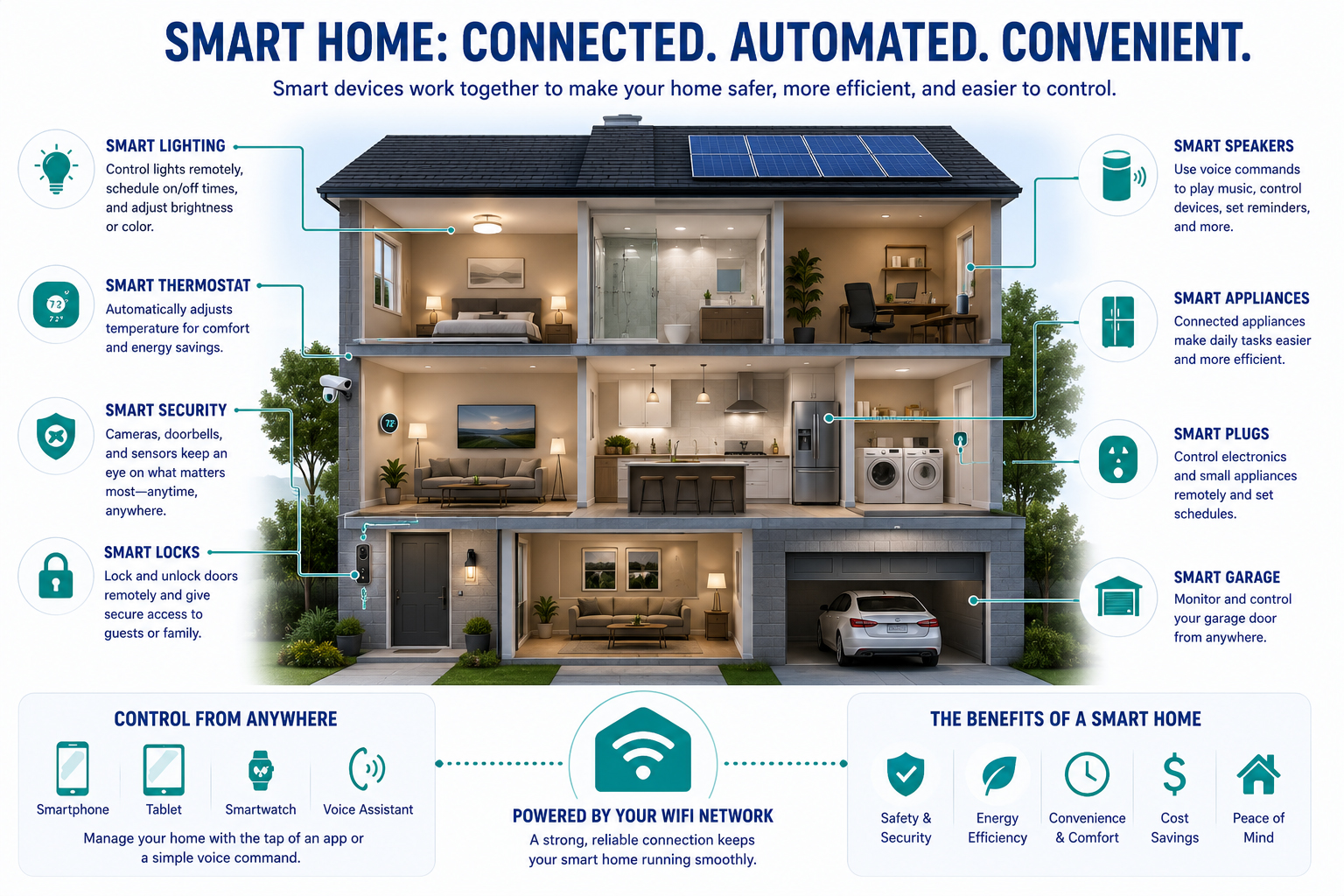
Smart home technology is everywhere—from voice assistants and smart lighting to automated security systems and connected thermostats. But if you’ve ever researched smart home products, you’ve probably come across a flood of technical terms that sound confusing or overly complicated.
The good news is that you don’t need to be a tech expert to understand the basics. Knowing a few key terms can make it much easier to choose the right devices, build a reliable system, and avoid compatibility headaches.
Smart Home
A smart home is a home that uses connected devices to automate and control everyday functions like lighting, climate, security, entertainment, and appliances. These systems can usually be controlled through a smartphone, tablet, voice assistant, or automation routines.
WiFi
WiFi is the wireless network that connects your smart devices to the internet and to each other. A strong and reliable WiFi network is the foundation of most smart homes.
If your WiFi is weak, you may experience:
- • Delayed device responses
- • Cameras going offline
- • Buffering video feeds
- • Failed automations
That’s why upgrading your network is often one of the most important smart home improvements.
Mesh WiFi
Mesh WiFi systems use multiple access points throughout your home to create seamless wireless coverage. Unlike traditional routers that broadcast from one location, mesh systems eliminate dead zones and provide stronger connections across larger spaces.
They’re especially useful for:
- • Multi-story homes
- • Large floor plans
- • Homes with thick walls
- • Smart homes with many connected devices
Smart Hub
A smart hub acts as the “brain” of your smart home system. It allows different devices and brands to communicate with each other through one central platform.
Instead of opening several apps to control different products, a hub helps unify everything into one streamlined experience.

Smart Hub Mounted on the Wall at a Client's Home in Roswell, GA
Automation
Automation allows smart devices to perform actions automatically based on schedules, triggers, or conditions.
Examples include:
- • Lights turning on at sunset
- • Doors locking automatically at night
- • Thermostats adjusting when you leave home
- • Security cameras activating when motion is detected
Automation is what transforms a collection of devices into a truly smart home.
Voice Assistant
Voice assistants let you control devices using spoken commands. Popular examples include voice-controlled speakers and displays that can adjust lighting, play music, answer questions, or manage routines.
Voice control adds convenience and hands-free operation to everyday tasks.
Smart Thermostat
A smart thermostat automatically manages your home’s heating and cooling system for improved comfort and energy efficiency.
Many models can:
- • Learn your schedule
- • Adjust temperatures automatically
- • Reduce energy usage
- • Be controlled remotely from your phone
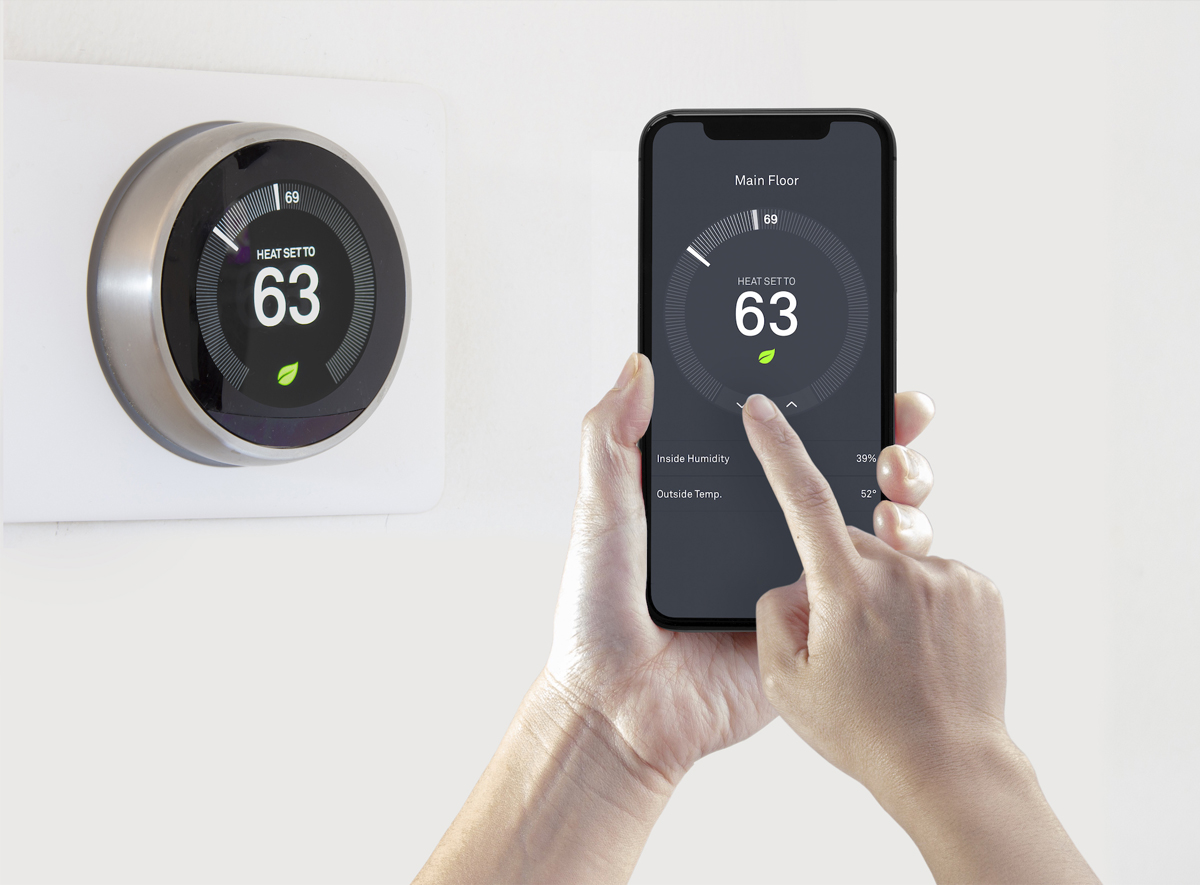
A Smart Thermostat Can be Controlled Remotely
Smart Lighting
Smart lighting systems allow you to control lights remotely, automate schedules, adjust brightness, and even change colors depending on the system.
Benefits include:
- • Energy savings
- • Convenience
- • Improved ambiance
- • Enhanced security when away from home
Smart Security
Smart security includes connected devices like cameras, doorbells, locks, sensors, and alarms that help monitor and protect your property.
Many systems offer:
- • Real-time alerts
- • Remote viewing
- • Motion detection
- • Two-way communication
- • Cloud recording
Bandwidth
Bandwidth refers to how much data your network can handle at once. The more connected devices you have, the more bandwidth you need.
Homes with multiple cameras, streaming devices, gaming systems, and smart appliances often require stronger internet speeds and upgraded networking equipment.
Internet of Things (IoT)
The Internet of Things, often shortened to IoT, refers to physical devices connected to the internet that can communicate and exchange data.
In a smart home, IoT devices can include:
- • Smart TVs
- • Thermostats
- • Doorbells
- • Appliances
- • Lighting systems
- • Speakers
Compatibility
Compatibility simply means whether devices can work together within the same ecosystem or platform.
Not all smart devices communicate seamlessly, which is why planning your system carefully is important before purchasing products.
Smart home technology doesn’t have to feel overwhelming. Once you understand the basic terms, it becomes much easier to make informed decisions and build a system that fits your lifestyle.
Whether you’re starting with a few smart devices or planning a fully connected home, having the right setup—and the right guidance—can make all the difference.